When an OEM starts scoping a new electronic product, one decision shapes almost everything: will you need a bare PCB assembly or a complete box build?
Get the answer early, and your supply chain stays clean, your lead times stay predictable, and your costs stay within budget. Get it wrong, and you may find yourself resourcing mid-project, absorbing integration failures, or dealing with coordination overhead that was never in the original program budget.
For engineering and procurement teams choosing a manufacturing partner, knowing which build scope fits your program before the design review saves time, cost, and re-work down the line.
What Each Service Actually Covers
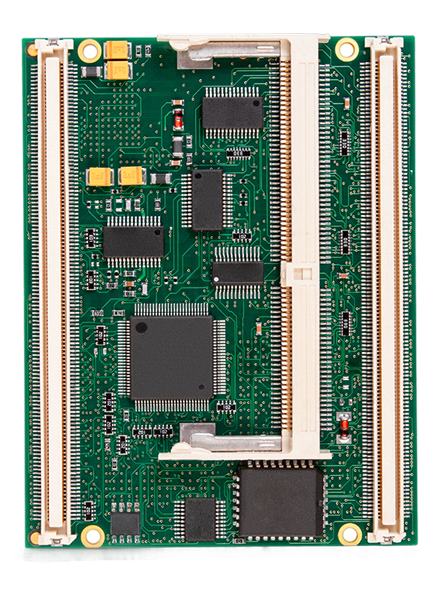
PCB assembly, often called PCBA, is the process of populating a bare printed circuit board with electronic components using surface-mount technology (SMT) and through-hole soldering, followed by inspection and testing. The deliverable is a functioning circuit board, ready for integration into a larger system.
A box build assembly integrates one or more PCBAs with wire harnesses and cable assemblies, connectors, power supplies, enclosures, switches, displays, and other electromechanical components into a complete, testable unit. The deliverable is a finished electronic product, or a major sub-system of one, ready to ship or install.
The line between the two is not always obvious. A rugged industrial controller, a medical monitoring device, a communications sub-rack, and a power distribution module may all look like “box builds” from the outside. But the scope of work, the required skill set, and the right partner profile differ considerably depending on what is actually inside.
When PCB Assembly Is Right For Your Team
A contract manufacturer that excels in PCBA, with strong SMT capability, clean DFM review processes, and reliable component traceability, is the partner to prioritize. Low-volume PCB assembly requires a manufacturer that can handle small-batch production without sacrificing quality or incurring excessive setup costs.
If your product architecture places integration responsibility either in-house or with a downstream systems integrator, PCB assembly is often the most efficient approach.
Common scenarios include:
- Your engineering team performs final assembly and enclosure build at your own facility
- You are building a low-volume PCB assembly run for prototyping or engineering validation before committing to a full system build
- Your product uses a standard, off-the-shelf enclosure that does not require custom fabrication or harness routing
- You need the flexibility to work with multiple downstream integrators across different product lines
When to Choose Box Build
Box build assembly manufacturers who operate as true system integrators reduce the number of handoffs in your supply chain. Every handoff between suppliers is a potential point of delay, miscommunication, or quality escape. Consolidating PCBA and box build under one roof compresses that risk significantly.
Box build assembly makes the most sense when the finished unit requires coordination among multiple subsystems that must work together before the product leaves the manufacturer.
Signs that you need a box build partner rather than a standalone PCBA supplier:
- Your product ships to a customer or end user as a complete, testable unit
- Integration requires custom wire harness routing, connector assembly, or cable management within an enclosure
- You are managing quality across multiple suppliers today, and the cost and risk of that coordination is growing
- Your product requires firmware installation, final system-level testing, or configuration before delivery
- Regulatory compliance, traceability, or certification requirements apply to the finished assembly, not just the board
PCB Assembly vs Box Build
| Factor | PCB Assembly | Box Build Assembly |
| Deliverable | Populated circuit board | Complete testable unit |
| Integration Scope | Board-level only | Board + enclosure + harness + I/O |
| Firmware / Config | Not included | Included per spec |
| Best For | Prototype runs, in-house integration | Production units, turnkey delivery |
| Supplier Count | One (PCBA only) | One (all-in) |
| Lead Time Risk | Lower | Managed by a partner |
| Low Volume Fit | Strong | Strong with the right partner |
How Golden West Technology Supports the Full Build Scope
Whether you need a high-quality PCB assembly for prototyping or a fully integrated box build ready to ship, Golden West Technology supports both, without forcing you to manage multiple vendors.
From early-stage DFM guidance and low-volume PCBA runs to full turnkey box build integration, testing, and delivery, GWT gives your team a single, reliable partner across the entire build lifecycle.
If you’re still defining your scope or want to avoid costly handoffs later, this is where the right conversation starts.