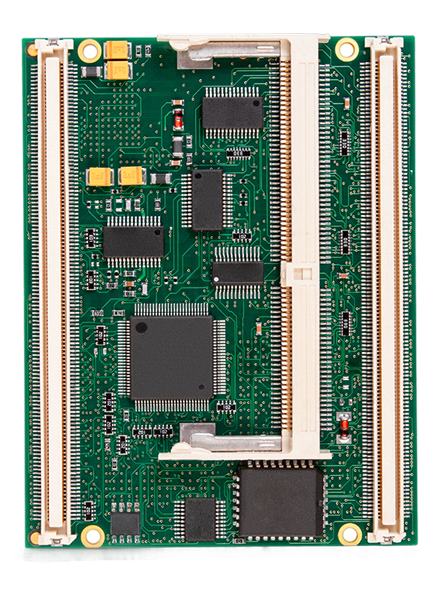
For many OEMs, consolidating production under a single provider that offers PCB box build assembly services can simplify operations, reduce risk, and improve overall program performance.
The question is not whether supplier consolidation is always the right choice. The question is when the benefits outweigh the complexity of managing multiple manufacturing partners.
The Hidden Cost of Managing Multiple Suppliers
A typical electronics manufacturing program can involve several handoffs before a finished product is ready for shipment. Components are sourced from one supplier, PCB assembly is completed by another, wiring and cable integration happen elsewhere, and final enclosure assembly is handled by a separate vendor.
Each transition introduces opportunities for delays, communication breakdowns, and quality issues.
Engineering teams often spend valuable time answering questions from multiple suppliers. Procurement teams must manage separate purchase orders, lead times, and vendor relationships. Program managers become responsible for coordinating schedules across organizations with different priorities and production capacities.
Manufacturing decisions made early in the development process can significantly affect supply chain complexity, lead times, and overall project risk.
What PCB Box Build Assembly Services Include
Many OEMs associate PCB assembly with populating a circuit board and performing inspection. However, modern PCB box build assembly services extend far beyond board-level manufacturing.
A comprehensive box build solution typically includes:
- PCB assembly
- Cable and wire harness integration
- Connector installation
- Display and HMI integration
- Power supply installation
- Mechanical assembly
- Enclosure integration
- Functional testing
- Final packaging and labeling
The goal is to deliver a fully assembled product rather than a partially completed electronic subsystem.
Box build manufacturing should integrate PCBs with wiring, connectors, displays, enclosures, and other electromechanical components while supporting engineering review, supply chain management, and quality testing throughout production.
When Manufacturers Should Consolidate
Not every project requires a full turnkey approach. There are several situations where supplier consolidation can provide significant benefits.
Complex Electromechanical Products
As products incorporate more electronic and mechanical subsystems, integration becomes a critical success factor.
When multiple boards, wiring assemblies, displays, sensors, and enclosures must work together, communication between suppliers becomes increasingly important. A single manufacturing partner overseeing the entire build process can identify integration issues earlier and reduce assembly errors.
This is especially valuable in industries such as aerospace, defense, medical devices, industrial automation, and networking equipment, where reliability requirements are high.
Tight Program Schedules
Every supplier handoff introduces additional scheduling dependencies.
If one vendor experiences delays, downstream suppliers may be unable to continue production. Engineering changes can also become difficult to coordinate across multiple organizations.
A provider offering full-turnkey PCB assembly can manage sourcing, manufacturing, testing, and final assembly under a single schedule. This reduces administrative overhead and improves visibility throughout the project lifecycle.
Limited Internal Resources
Many OEMs do not have large procurement or manufacturing engineering teams available to manage supplier relationships.
When internal resources are stretched, coordinating multiple vendors can become a significant burden. Consolidation allows engineering, procurement, and operations teams to focus on product development and business objectives instead of daily supplier management.
A Single Manufacturing Partner Can Enhance Quality
One of the strongest arguments for consolidation is quality control.
When manufacturing is distributed across multiple vendors, root-cause analysis becomes more difficult. If a finished product experiences performance issues, determining where the problem originated can take considerable time.
A unified PCB assembly manufacturing approach creates a single chain of accountability. The same organization oversees procurement, assembly, integration, testing, and final inspection.
Benefits often include:
- Improved traceability
- Faster issue resolution
- More consistent documentation
- Better process control
- Reduced handling damage
- Higher first-pass yields
For regulated industries, these advantages can support compliance and simplify quality audits.
Supply Chain Advantages
Component shortages and supply chain disruptions remain concerns for many OEMs.
Managing sourcing across multiple suppliers can create visibility challenges, especially when lead times change unexpectedly. A partner providing turnkey PCB assembly services can centralize procurement and maintain a clearer view of component availability throughout the program.
Many box build manufacturers also offer inventory management programs that help customers reduce lead times and improve production continuity.
When sourcing, assembly, and inventory management are aligned under one organization, manufacturers can often react more quickly to market changes and component constraints.
Questions OEMs Should Ask Before Consolidating
Before transitioning to a consolidated manufacturing model, OEMs should evaluate potential partners carefully.
The answers will help determine whether a supplier can serve as a long-term manufacturing partner rather than simply a contract assembler.
Key questions include:
- Can they support both PCB assembly and box build integration?
- Do they provide engineering and DFM support?
- What testing capabilities are available?
- How do they manage procurement and supply chain risk?
- Can they support both prototypes and production volumes?
- What industries do they serve?
- What quality certifications and inspection processes are in place?
Consolidation Is About More Than Convenience
By partnering with a provider that offers PCB box build assembly services, turnkey PCB assembly, testing, and final integration under one roof, OEMs can simplify program management while improving visibility, accountability, and production efficiency.
Golden West Technology supports OEMs with integrated manufacturing solutions that include PCB assembly, turnkey manufacturing, box build and final assembly, testing, inspection, and inventory management.
Reach out to our team if your organization is looking to reduce complexity and streamline production.