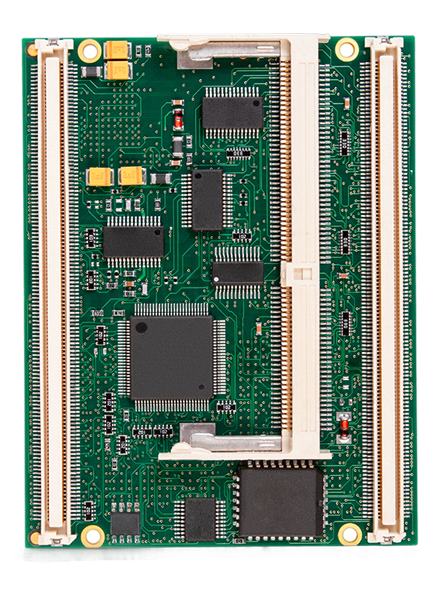
Modern electronics continue to become smaller, faster, and more complex. From aerospace controls and medical devices to industrial automation systems and communications equipment, manufacturers depend on reliable assembly processes that can support increasingly dense circuit board designs.
At the center of this evolution is SMT PCB assembly, a manufacturing process that enables high-speed, highly accurate placement of electronic components directly onto the surface of printed circuit boards. Today, Surface Mount Technology (SMT) is the dominant assembly method used across the electronics industry because it supports miniaturization, scalability, and consistent quality.
For OEMs evaluating manufacturing partners or planning a new product launch, understanding how SMT works can help improve design decisions, production planning, and supplier selection.
What Is SMT PCB Assembly?
SMT PCB assembly is the process of mounting electronic components directly onto the surface of a printed circuit board (PCB). Unlike traditional through-hole assembly, which requires component leads to pass through drilled holes in the board, SMT components are attached directly to surface-mounted pads.
This approach allows manufacturers to place significantly more components within a smaller footprint while improving production speed and consistency.
A typical PCB assembly SMT process uses automated equipment to place components with exceptional accuracy, making it ideal for both prototype and high-volume production environments.
Today, SMT is used in nearly every electronic device, including:
- Aerospace electronics
- Defense systems
- Medical equipment
- Industrial controls
- Telecommunications hardware
- Automotive electronics
- Consumer devices
How the SMT Assembly Process Works
Although SMT manufacturing relies heavily on automation, achieving consistent results requires a carefully controlled process.
1. Solder Paste Application
The process begins with applying solder paste to designated pads on the PCB using a precision stencil.
The solder paste contains a mixture of microscopic solder particles and flux. The stencil ensures the correct amount of material is deposited at each component location.
Proper paste deposition is critical because it directly impacts solder joint quality and long-term reliability.
2. Automated Component Placement
After solder paste application, automated pick-and-place equipment positions components onto the board.
Modern SMT equipment can place tens of thousands of components per hour while maintaining extremely tight placement tolerances.
Many electronics manufacturers, including providers of advanced PCB assembly services, support a wide range of component types, including:
- 0201 and smaller passive components
- Integrated circuits
- Ball Grid Arrays (BGAs)
- Micro BGAs
- Fine-pitch components
- Mixed-technology assemblies
3. Reflow Soldering
Once components are placed, the board moves through a reflow oven.
The oven follows a carefully controlled temperature profile that melts the solder paste and forms permanent electrical and mechanical connections between components and the PCB.
Temperature control is essential for preventing defects while ensuring consistent solder joint integrity.
4. Inspection and Quality Verification
After soldering, manufacturers inspect assemblies to verify quality and identify potential defects.
Common inspection methods include:
- Automated Optical Inspection (AOI)
- 3D AOI
- X-ray inspection
- Functional testing
- In-circuit testing
- Flying probe testing
Inspection processes help ensure assemblies meet performance requirements before moving into final integration or shipment.
Benefits of SMT PCB Assembly
SMT has become the preferred assembly method for most electronic products because it offers significant manufacturing advantages, including:
Higher Component Density
Surface mount components occupy less board space than through-hole components.
This allows engineers to design smaller products while incorporating more functionality into a given footprint.
Faster Production
Automated placement equipment significantly increases manufacturing throughput.
For OEMs moving from prototype to production, SMT provides a scalable process capable of supporting both low-volume and high-volume requirements.
Improved Reliability
Automated placement and soldering processes reduce variability and improve consistency across production runs. When combined with robust inspection procedures, PCB SMT assembly helps support long-term product reliability.
Lower Manufacturing Costs
Although SMT equipment represents a significant capital investment, automation often reduces labor requirements and improves manufacturing efficiency. For production programs with moderate to high volumes, SMT frequently delivers lower overall assembly costs.
SMT vs. Through-Hole Assembly
While SMT dominates modern electronics manufacturing, through-hole technology (PTH) remains important for certain applications.
When SMT Is Preferred
SMT is often the best choice when products require:
- Compact designs
- High component counts
- Automated production
- High-volume manufacturing
- Lightweight assemblies
When Through-Hole Is Still Needed
Through-hole assembly is commonly used for:
- Connectors
- Transformers
- High-power components
- Heavy mechanical interfaces
- Applications requiring enhanced mechanical strength
Many products incorporate both technologies.
In these cases, manufacturers use mixed-technology assembly processes that combine SMT and through-hole assembly within a single production workflow. Providers offering comprehensive PCB assembly services often support SMT, PTH, and mixed-technology manufacturing under one roof.
4 Design Considerations for SMT Manufacturing
Successful SMT production begins during the design phase, and engineers can improve manufacturability early in the process by considering:
- Component Availability
Component shortages continue to affect many industries. Early collaboration with manufacturing partners can help identify sourcing risks before production begins.
- Component Spacing
Adequate spacing improves placement accuracy, inspection accessibility, and soldering quality.
- Panelization Strategy
Panel design impacts manufacturing efficiency, handling, and throughput.
- Design for Manufacturability (DFM)
DFM reviews help identify potential issues before production, reducing delays and costly engineering changes.
Many contract manufacturers provide DFM support as part of their prototyping and new product introduction (NPI) services.
What to Look for in an SMT Assembly Partner
Not all manufacturing partners offer the same level of capability.
When evaluating providers of SMT PCB assembly, OEMs should consider several factors.
Equipment Capabilities
Look for manufacturers that support:
- Fine-pitch components
- BGA assembly
- Micro BGA placement
- Automated inspection systems
- X-ray inspection
Quality Certifications
Depending on the application, important certifications may include:
- ISO 9001
- AS9100
- ISO 13485
- ITAR registration
These certifications demonstrate documented quality systems and process controls.
Engineering Support
Strong engineering support can improve manufacturability, reduce costs, and accelerate production timelines. Manufacturers that offer DFM reviews, component sourcing assistance, and prototype support often provide additional value throughout the product lifecycle.
Scalability
A qualified partner should be able to support production from prototype builds through full-volume manufacturing without requiring a transition to another supplier.
Why SMT Remains the Foundation of Modern Electronics Manufacturing
As electronic products continue to evolve, SMT PCB assembly remains the industry standard for producing reliable, compact, and high-performance circuit boards. The combination of automation, precision, and scalability makes SMT essential for modern OEMs across aerospace, defense, medical, industrial, and commercial markets.
Manufacturers that combine advanced PCB SMT assembly capabilities with engineering support, inspection technologies, testing services, and scalable production can help OEMs bring products to market faster while maintaining the quality standards today’s industries demand.
Reach out to our team if you’re looking for SMT PCB assembly services built with expertise, quality, and speed.