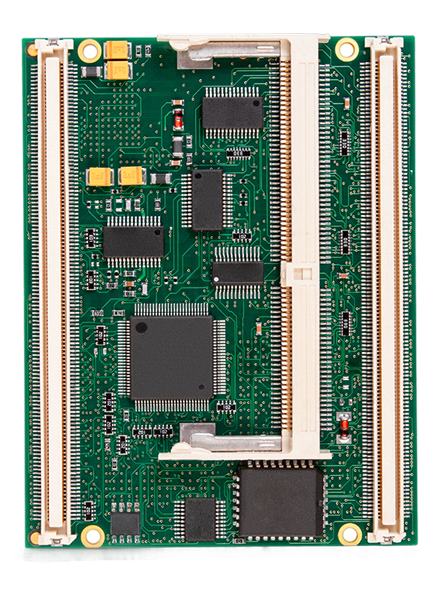
Selecting the right provider for PCB assembly services has a direct impact on product quality, supply chain stability, production timelines, and overall program success. For OEMs developing electronic products, the assembly partner is more than a contract manufacturer. They become an extension of the engineering, procurement, and operations teams.
Whether you’re sourcing a new product introduction, scaling production, or consolidating suppliers, evaluating manufacturing partners carefully can help reduce risk and improve long-term performance.
What PCB Assembly Services Include
At its core, a PCB assembly service involves mounting and soldering electronic components onto a printed circuit board according to design specifications. However, modern manufacturing partners often provide a much broader range of capabilities.
Common PCB assembly services include:
- Surface Mount Technology (SMT) assembly
- Through-hole assembly
- Mixed-technology assembly
- Automated optical inspection (AOI)
- Functional testing
- X-ray inspection
- Prototype builds
- Low-volume production
- High-volume manufacturing
- Supply chain and component procurement
- System integration
- Final testing and packaging
Many OEMs also require through-hole PCB assembly service capabilities for products containing connectors, transformers, power components, or applications requiring enhanced mechanical strength.
As products become more complex, manufacturers that can support multiple processes under one roof often help simplify production and reduce handoffs between suppliers.
Understanding Turnkey vs. Consigned Assembly
One of the first decisions OEMs face is whether to use turnkey or consigned manufacturing.
Turnkey PCB Assembly
With turnkey PCB assembly, the manufacturing partner manages component sourcing, procurement, inventory management, PCB fabrication coordination, assembly, testing, and delivery.
Benefits include:
- Reduced administrative workload
- Simplified supplier management
- Improved material visibility
- Faster production scheduling
- Lower risk of component shortages disrupting production
Turnkey programs are especially valuable for OEMs seeking to streamline procurement and accelerate product launches.
Consigned Assembly
In a consigned model, the OEM supplies some or all components while the manufacturer performs assembly services.
Benefits include:
- Greater control over component sourcing
- Ability to leverage existing supplier agreements
- Access to specialized or customer-supplied components
However, consigned programs typically require more coordination between procurement teams and manufacturing partners.
For many organizations, turnkey solutions offer the most efficient path for ongoing production, while consigned assembly may be appropriate for specialized projects or prototype builds.
The Importance of Prototype PCB Assembly Services
Before moving into full production, many OEMs rely on prototype PCB assembly services to validate designs, identify manufacturability concerns, and reduce development risk.
A strong prototype partner can help engineers:
- Verify component placement
- Validate electrical performance
- Identify design-for-manufacturing (DFM) issues
- Evaluate assembly processes
- Reduce costly redesigns later in production
Early collaboration during prototype development often leads to smoother transitions into production and fewer unexpected delays.
When evaluating suppliers, ask about prototype turnaround times, engineering support, and their ability to scale from prototype quantities to full production volumes.
Domestic vs. Offshore Production
Cost is often a significant consideration when selecting a manufacturing partner, but it should not be the only factor.
Benefits of Domestic Manufacturing
Domestic PCB assembly providers typically offer:
- Faster communication
- Shorter lead times
- Easier engineering collaboration
- Simplified logistics
- Reduced shipping risks
- Better visibility into production status
For products with frequent engineering changes, accelerated timelines, or regulatory requirements, domestic manufacturing can provide meaningful advantages.
Benefits of Offshore Manufacturing
Offshore production may offer lower labor costs for certain high-volume programs.
Potential advantages include:
- Lower piece-part costs
- Large-scale production capacity
- Access to established global supply networks
However, OEMs should also consider factors such as longer shipping times, geopolitical risks, communication challenges, tariffs, and quality oversight requirements.
Many organizations evaluate total landed cost rather than unit price alone when comparing domestic and offshore options.
Certifications and Quality Standards to Look For
Quality management systems provide important insight into a manufacturer’s processes and commitment to consistency.
Several certifications should be considered when evaluating PCB assembly services providers.
ISO 9001
ISO 9001 demonstrates a documented quality management system focused on process control, continuous improvement, and customer satisfaction.
AS9100
For aerospace applications, AS9100 certification adds industry-specific quality requirements beyond ISO 9001 standards.
IPC Standards
Manufacturers should follow relevant IPC standards governing PCB assembly quality, workmanship, and inspection criteria.
Examples include:
- IPC-A-610
- J-STD-001
- IPC-7711/7721
ITAR Registration
For defense-related programs, ITAR compliance may be required to ensure proper handling of controlled technical data and products.
Beyond certifications, OEMs should ask about traceability systems, inspection procedures, testing capabilities, and corrective action processes.
Evaluating Box Build and System Integration Capabilities
Many OEMs are moving toward supplier consolidation to reduce complexity and improve efficiency.
Manufacturers that provide box build and PCB assembly services can often streamline production by combining multiple manufacturing processes within a single supply chain.
These services may include:
- Mechanical assembly
- Cable and wire harness integration
- Enclosure assembly
- Subassembly integration
- Functional testing
- Final product configuration
- Packaging and fulfillment
Similarly, providers offering PCB box build assembly services can help reduce logistics challenges, improve accountability, and shorten production timelines by managing multiple stages of manufacturing under one partner relationship.
7 Questions to Ask Potential PCB Assembly Partners
Selecting a manufacturing partner requires more than reviewing capabilities lists.
OEMs should ask targeted questions to assess long-term fit and operational performance.
Consider asking:
- What industries do you specialize in?
Industry experience often translates into stronger process controls, compliance knowledge, and engineering support.
- Can you support both prototypes and production?
A partner capable of handling the full product lifecycle can reduce transition risks.
- How do you manage component sourcing?
Understanding procurement strategies helps evaluate supply chain resilience and inventory management capabilities.
- What testing and inspection methods do you use?
Look for documented quality processes that support product reliability.
- What are your typical lead times?
Lead time performance directly impacts production schedules and customer commitments.
- Do you offer turnkey manufacturing services?
Integrated support can simplify supplier management and improve program execution.
- Can you provide box build capabilities?
Combining assembly and integration services may reduce costs and improve efficiency.
Choosing a Partner for Long-Term Success
As products become more complex and supply chains continue to evolve, selecting a partner that can support everything from prototype PCB assembly services to turnkey PCB assembly and PCB box build assembly services can help improve efficiency, reduce risk, and position programs for long-term success.
Contact our team if you’re looking for a PCB assembly partner ready to get to work on your next project.