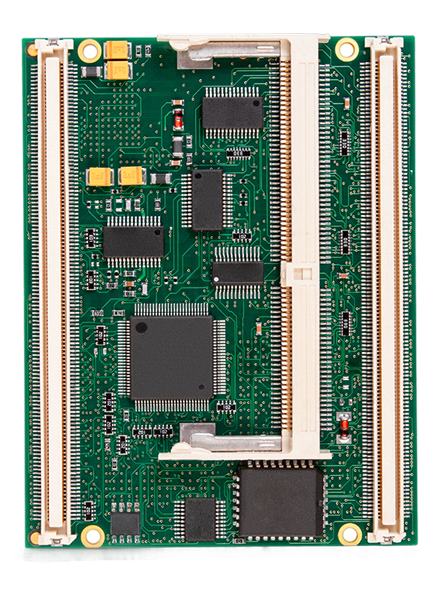
Box build assembly is the process of integrating all the electrical and mechanical components of a product into a complete, functional unit. That includes the enclosure, the PCBAs inside it, wiring harnesses, connectors, displays, switches, thermal management hardware, and any firmware or software loaded during production.
The name comes from the end result: A product that is ready to ship, or to slot directly into a larger system, without additional integration work on the customer’s end.
Depending on the industry, you may hear it called system assembly, systems integration, or final assembly, but the scope is the same.
What Does Box Build Assembly Include?
The depth of involvement depends on the program. Some teams provide a full consignment kit; others rely on their contract manufacturer for turnkey sourcing, procurement, and supply chain management from the start.
The specific scope varies by requirements, but a full box build typically covers:
-
- Enclosure preparation, including drilling, labeling, and surface finishing
-
- PCB assembly and integration (SMT, through-hole, or mixed-technology)
-
- Wiring harness assembly and cable routing
-
- Component mounting: connectors, switches, displays, fans, heat sinks
-
- Mechanical sub-assembly, including standoffs, brackets, and chassis hardware
-
- Conformal coating or potting where environmental protection is required
-
- Firmware and software loading
-
- Functional testing, in-circuit testing, and customer-specified inspection
- Labeling, packaging, and fulfillment
Why Your Team Should Use Box Build Assembly
The case for outsourcing box build comes down to three factors: Complexity, accountability, and capacity.
Complexity is increasing.
Products across aerospace, defense, medical, and industrial markets continue to add more electronic parts. More subsystems mean more integration touchpoints, more potential failure modes, and more documentation requirements. A partner who has built hundreds of box build programs has already solved the integration problems your team could spend months learning.
Accountability is cleaner with a single source.
When your enclosure supplier, your PCBA house, and your assembly team are three different companies, quality issues are harder to trace and slower to resolve. One partner, one quality system, and one point of contact removes that ambiguity.
Capacity is a constraint that can’t be ignored.
Contract manufacturing gives your program access to a running SMT line, DFM engineers, and tested supply chain relationships without building any of that in-house.
Single-Source vs. Multi-Vendor: What the Decision Actually Costs
Many OEMs start with a fragmented supply base because individual vendors look less expensive. The full cost of coordination, including engineering hours spent managing handoffs and resolving supplier disputes, rarely appears on the initial quote.
| Single-source box build | Multi-Vendor Approach | |
| Project management | One point of contact | Multiple vendor relationships |
| Quality accountability | Unified, end-to-end | Divided across suppliers |
| Lead times | Streamlined scheduling | Dependent on vendor coordination |
| DFM feedback | Early, integrated | Limited or delayed |
| Supply chain visibility | Centralized BOM management | Fragmented |
| IP protection | Single NDA, secure facility | Spread across vendors |
| Cost structure | Consolidated pricing | Hidden coordination overhead |
What to Look for in a Box Build Partner
Not every contract manufacturer that offers box build delivers the same scope. Before you commit to a program, verify that your potential partner has:
-
- Integrated PCBA capabilities: Board assembly and box build performed in the same facility means clearance problems and thermal issues get caught in DFM, not on a finished unit.
-
- Certifications scoped to the actual work: AS9100D, ISO 9001:2015, and ITAR registration are the baseline for aerospace, defense, and medical programs.
- DFM review before your Bill of Materials (BOM) is locked: Early design review catches sourcing risks and integration issues while changes are still cheap.
How Box Build Assembly Fits Into Your Product Development Timeline
Programs that lock their BOM before engaging a contract manufacturer often absorb significant rework when sourcing realities don’t match design assumptions:
-
- Flag integration issues before they become production problems
-
- Recommend part alternatives if preferred components are allocated or end-of-life
-
- Optimize the design for efficient assembly and test
- Establish accurate lead time expectations based on actual sourcing conditions
Waiting until your design is complete and your schedule is fixed limits what a manufacturing partner can do for you.
Box Build Assembly at Golden West Technology
When you’re committing to a box build partner, you’re betting your schedule, your quality record, and in regulated industries, your compliance. Golden West has been solving those problems since 1974 from our Fullerton, California, facility.
We work with OEMs in aerospace, defense, medical, industrial, and commercial markets, and our certifications include AS9100D, ISO 9001:2015, and ITAR registration.
If you are evaluating box build partners, our team is available to review your design, discuss your timeline, and provide a quote: Request a Quote